Big changes begin with small signals — in your work, your city, and the services you use every day. Learn to notice them early, while you still have time to act.
The real value isn't a ready-made forecast you read once and forget. It's a skill you can use on everything you see — today, tomorrow, and a year from now. Every big change in your life passes through three moments: the moment you notice it, the moment you understand how it connects to something bigger, and the moment you decide to act on it. And it's a skill you can learn.
Not every piece of news matters. Real noticing isn't about knowing more — it's about pausing at the detail that doesn't fit the usual pattern, before it slips past you.
Change doesn't come out of nowhere. When you notice something, the important question isn't "What is this?" but "What bigger picture is this part of?"
Noticing and connecting, without action, stay as thoughts in your head. The value shows up when you take an actual step based on them.
Ready to see where you stand on these three skills? The tool below takes two minutes at most.
The Signal Score →Three places where this way of seeing meets your everyday life.
Cities don't change overnight. They change in the small details first.
Think back to the last time you walked through your neighborhood and noticed something new: a shop that closed and another that opened in its place, a sidewalk repaired for no obvious reason, a sign for a delivery service that wasn't there before. Each of these details is minor on its own. Put them together, and they may tell a bigger story about where the whole area is heading.
// The signal that came firstBefore an area visibly changes character, there are usually small decisions and moves that come first: new permits, investment in infrastructure, a shift in the kind of shops that open. The problem is that most people notice the change after it's complete, not while it's taking shape.
// Three signs you can useLook around you now — what detail have you noticed in your neighborhood over the past two months without giving it enough attention?
Not every organization moves at the same speed — and the difference isn't random.
Think of an app or service you use that seems to keep getting better — every so often, there's a noticeable update or improvement. At the same time, there's probably another service — public or private — that has stayed exactly the same for years.
// The signal that came firstBefore a service clearly becomes one that keeps getting better, there are usually practical signs: limited trial versions (betas) before a full launch, visible responses to user feedback on social media, and small, frequent updates instead of rare, big launches.
// Three signs you can useNext time you deal with any organization, notice: is this just a reaction, or a change built on a real understanding of what's ahead?
The biggest decisions of your life — your career, your children's education, your investments — are made in the middle of uncertainty. The question isn't how to remove that uncertainty, but how to handle it well.
When a currency is heading for a sharp fall, the signs rarely arrive all at once. I lived through one of those moments in Egypt. In the months before November 2016, when the Egyptian pound was allowed to float freely, economic signals pointed to a major exchange-rate decision getting closer — not certain, but enough to show a clear direction to anyone paying attention. Based on that direction, I chose to invest early in property, instead of waiting until the change was obvious to everyone. Those who waited ended up paying far more for the very same decision.
// The signal that came firstBefore any big decision needs rethinking, there are usually signs you can pick up in the wider direction around it — economic, professional, or technological. The problem is that most of us notice them late, once the change is obvious to everyone.
// Three signs you can useThe big decision you're putting off or weighing right now — have you noticed the wider direction around it?
Your personal read on how well you notice, connect, and act
Nine quick questions, honest answers, instant results. There are no right or wrong answers — but there is a difference between knowing yourself well and being surprised by yourself.
This is how your three skills look right now.
A short, practical guide in three chapters — Notice, Connect, Act — with real-life practices to help you grow the skill of reading signals in your everyday life, whatever your Signal Score.
The guide downloads right away, and a copy is emailed to the address you enter. If you tick the box above, you'll also join the MOFORESIGHT mailing list and we may send you updates about new content — every message has an unsubscribe link. If you don't, your email is used only to send you the guide and is not added to the mailing list.
Share a signal you noticed yourself — at work, in your neighborhood, anywhere around you. It might be the start of something that matters to others too.
You noticed it yourself, or through a specific source you can point to — whether by seeing it directly or by reading a particular study or report. Not just a common opinion you're repeating without a clear source.
It hasn't yet become a widely discussed topic in the media or in everyday conversation.
There's a logical chance it could grow into a bigger change if it continues or repeats.
Tied to a clear place and time — not a vague opinion about "the future" as a whole.
I'm a futures and foresight specialist. Systems thinking and data analysis are the two core tools I rely on to understand the complex links between decisions and their outcomes. I currently lead strategic foresight work at a leading government organization in Dubai — from spotting early signals to turning them into real strategic decisions — with more than 14 years of experience: not as theory to be taught, but as decisions and investments made in the real world. I led this organization to GIMI's international accreditation at Level 4 (Master), awarded after an independent external review. I also prepared two reports presented at the World Governments Summit and the Asia Pacific Cities Summit, and contributed to drafting the Dubai Declaration on the Future of Urban Governance, endorsed by more than 300 cities worldwide.
In 2019, I started an MBA. Just a few months in, there were scattered signals that artificial intelligence was about to reshape almost every field. They weren't loud signals, and they weren't making headlines at the time — but they were enough to deserve attention. So I decided to switch my focus entirely to artificial intelligence and data analytics, even though I had already started down a completely different path. Not long after, AI models burst onto the market, and what had been a quiet signal became something everyone was talking about. From that moment, I understood that the real difference isn't knowing the future — it's having the courage to act on a signal few people have noticed yet.
If you'd like to get in touch, you'll find me on LinkedIn — link below.
LinkedIn →
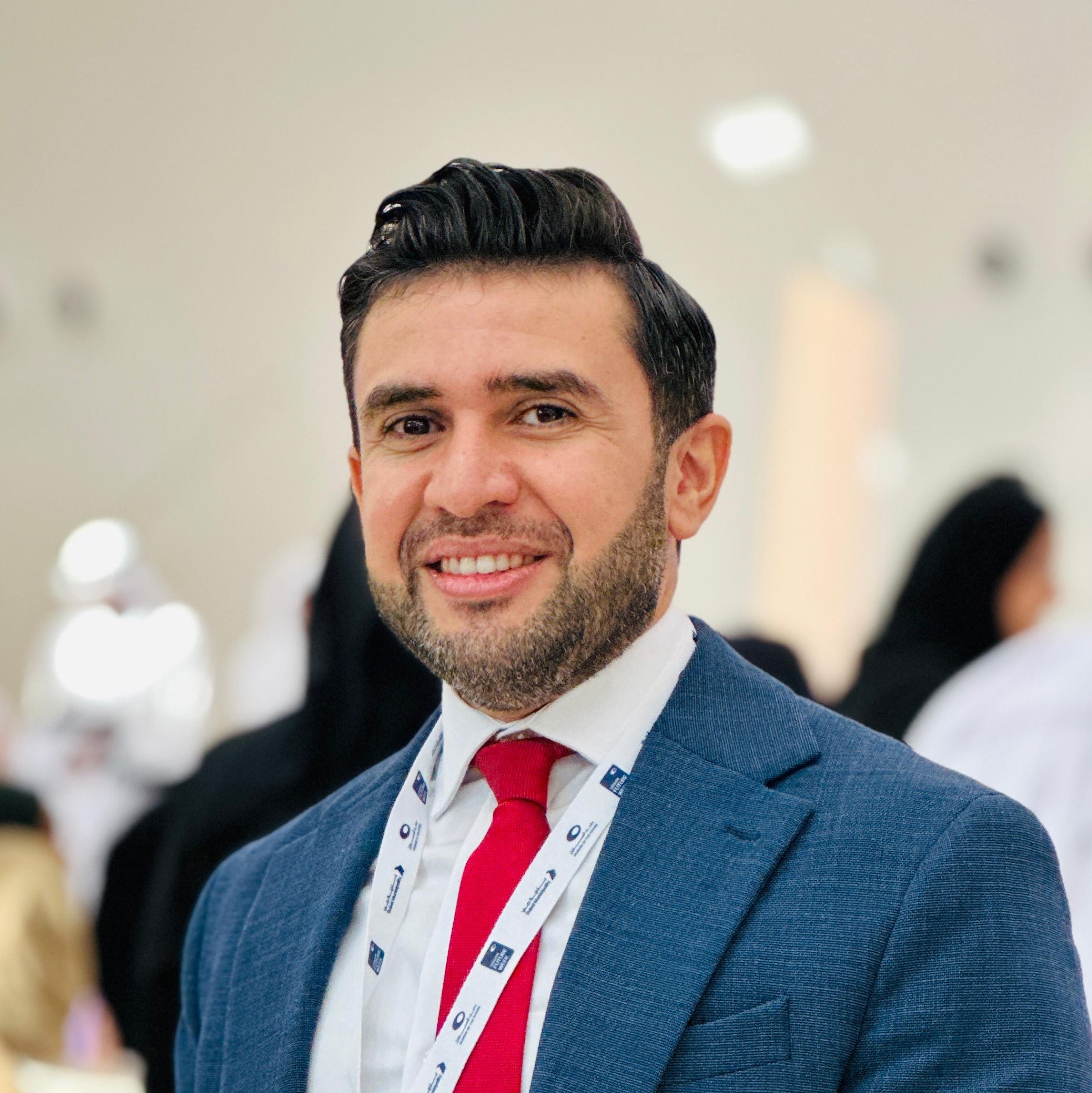
[Add the photo at assets/mohammed-ali.jpg]